Safari Myths: 10 Things Travellers Often Get Wrong About Safari
From khaki clothing to guaranteed Big Five sightings, safari is surrounded by myths. Here are some common misconceptions—and what travellers should actually expect in the wild.
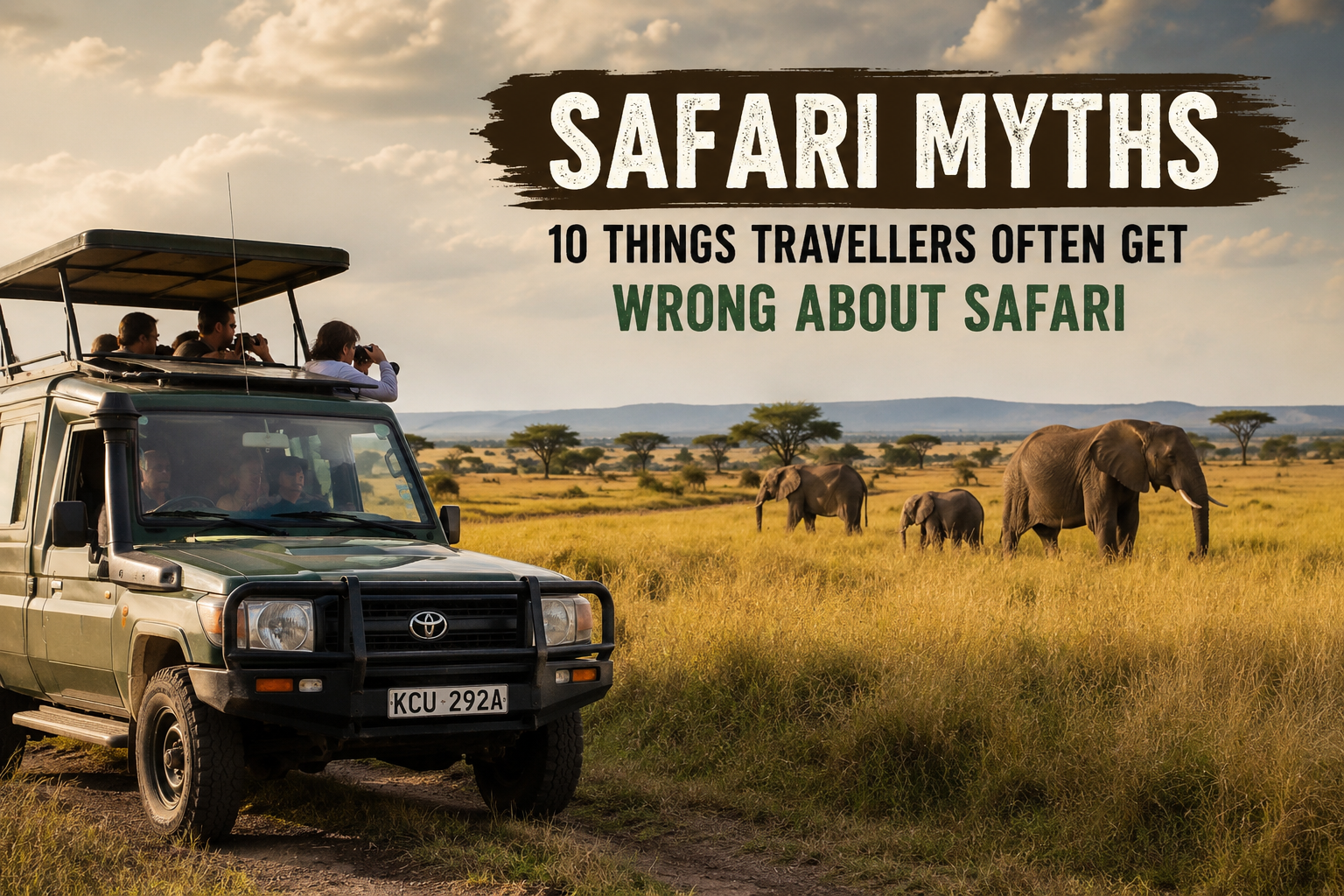
Safari Is Not Always What You See in the Movies
For many first-time safari travellers, expectations are shaped by documentaries, social media and movies. While Kenya’s wildlife can provide extraordinary experiences, some popular beliefs about safari simply aren’t true.
Understanding what is fact and what is myth can help you have a more enjoyable and responsible safari.
Myth 1: You Must Wear Khaki to Go on Safari
You don’t need to dress entirely in khaki.
Neutral colours such as beige, brown, olive and grey are practical because they are comfortable and less conspicuous in the bush, but wildlife is not waiting to attack someone wearing a bright-coloured shirt.
Comfort, weather and practicality should come first.
Myth 2: You Are Guaranteed to See the Big Five
There are no guarantees in wildlife viewing.
Lions, elephants, buffalo, leopards and rhinos are wild animals, and they move freely. You can spend several days in an excellent wildlife area and still miss one or more of the Big Five.
That is part of what makes safari different from visiting a zoo.
A good safari is about experiencing nature—not collecting animals from a checklist.
Myth 3: The Great Wildebeest Migration Happens on a Fixed Date
The migration does not follow a timetable.
Although July to October is traditionally associated with the herds being in Kenya’s Maasai Mara, the exact timing depends heavily on rainfall, grass and water availability.
Even during the peak season, a river crossing is never guaranteed.
Myth 4: Lions Are Everywhere
Lions are relatively easy to spot in some areas, but that does not mean they are around every corner.
They spend a significant amount of time resting, and their movements depend on prey, territory, temperature and other environmental factors.
Your guide’s knowledge of the area can make a major difference when searching for them.
Myth 5: Wild Animals Attack Safari Vehicles
Safari vehicles are generally treated differently from people walking on foot.
Animals can become accustomed to the presence of vehicles and may simply ignore them. However, they remain wild animals and must always be treated with respect.
This is why passengers should remain inside the vehicle when instructed and avoid sudden movements or attempts to attract an animal’s attention.
Myth 6: You Need an Expensive Camera
A professional camera can produce exceptional wildlife photographs, but it isn’t essential.
Modern smartphones can capture surprisingly good safari images, especially when an animal is relatively close.
The most important thing is being present and enjoying the experience. A photograph should be a bonus—not the entire reason for the game drive.
Myth 7: Safari Is Only About Seeing Animals
Wildlife is obviously a major attraction, but safari is much more than ticking animals off a list.
You experience landscapes, birdlife, sunsets, changing weather, local communities and the sounds of the African wilderness.
Sometimes a quiet sunrise over the savannah can be just as memorable as a spectacular animal sighting.
Myth 8: Animals Are Most Active All Day
Wildlife activity changes throughout the day.
Early mornings are often excellent for game viewing because temperatures are cooler and many animals are active. Late afternoon can also provide rewarding sightings.
During the hotter parts of the day, many animals rest or seek shade.
This is one reason early morning and afternoon game drives are so popular.
Myth 9: You Should Get as Close to Animals as Possible
Closer does not always mean better.
Responsible safari is about observing wildlife without unnecessarily disturbing it. An experienced guide will consider the animal’s behaviour, the terrain and the presence of other vehicles when deciding where to position the vehicle.
Sometimes staying farther away provides a much better and more natural observation.
Myth 10: A Good Safari Is About How Many Animals You See
This may be the biggest myth of all.
Safari is not a competition.
Seeing twenty different species in one day does not automatically make a safari better than seeing three species in memorable circumstances.
Watching a mother elephant with her calf, following a leopard through thick vegetation or sitting quietly as a herd of wildebeest moves across the plains can create memories that last far longer than a simple checklist.
The Reality of Safari
The beauty of safari is its unpredictability.
You cannot control where an animal will appear, when a herd will move or whether a predator will make a kill while you are watching. What you can control is how prepared you are and how responsibly you experience the wilderness.
Go with realistic expectations, listen to your guide and allow nature to surprise you.
At Safari Advice, we believe the best safari experiences begin with good information. Knowing what is fact, what is myth and what is simply unpredictable can help you enjoy the wild with greater appreciation.
