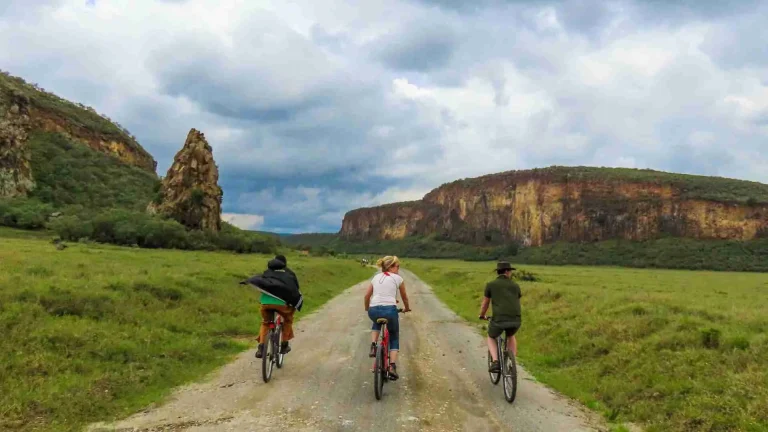
Tsavo doesn’t get the marketing budget the Masai Mara does, but it’s Kenya’s largest protected area by far, and the park I most often recommend to clients who want wilderness without crowds. Split into Tsavo East and Tsavo West by the Nairobi-Mombasa highway and railway, the two halves feel like different countries. Here’s how they actually differ, and how to decide which one, or both, belongs in your itinerary.
The Basics: One Park, Two Very Different Halves
Tsavo covers roughly 22,000 square kilometers combined, close to 4% of Kenya’s entire land area. Tsavo East is the larger, flatter, drier half, known for open plains and the famous red-dust elephants. Tsavo West is smaller, more rugged, with volcanic hills, natural springs, and denser vegetation. Most first-time visitors are surprised how different the two feel given they’re separated only by a highway.
Tsavo East: Open Plains and Red Elephants
Tsavo East is where you go for that classic dusty, wide-horizon safari feeling. The Galana River cuts through the park and is the main draw for wildlife during dry months.
- Red elephants: Tsavo’s elephants dust-bathe in the park’s red volcanic soil, turning them a distinctive rust color found nowhere else in Kenya
- Lugard Falls: A dramatic set of rapids and rock pools on the Galana River, one of the few places you can safely walk close to fast-moving water in a national park
- Yatta Plateau: The world’s longest lava flow, visible as a long dark ridge along the park’s western edge
- Open sightlines: Flatter terrain than Tsavo West means easier spotting of lion and cheetah from a distance
Insider tip: Head to Lugard Falls in the late afternoon. Hippos and crocodiles gather in the pools below the rapids, and the light on the red rock at that hour makes it one of the most underrated photo stops in Kenya.
Tsavo West: Springs, Hills, and Volcanic Terrain
Tsavo West feels more intimate and varied. Where Tsavo East is wide open, Tsavo West has hills, crater lakes, and thick riverine forest around its springs.
- Mzima Springs: Crystal-clear spring water pumping out 50 million gallons a day, with an underwater viewing chamber where you can watch hippos and fish through glass
- Shetani Lava Flow: A stark black volcanic field, still bare of vegetation from an eruption roughly 200 years ago, that you can walk across
- Chyulu Hills views: Rolling green hills on the park’s northern boundary, with Kilimanjaro visible on a clear day
- Better predator concealment: Denser bush means leopard sightings especially, though it takes more patience than the open plains of Tsavo East
Which One Should You Choose?
If you only have one day, and you’re coming from Nairobi or the coast, Tsavo East is usually the more efficient choice, closer to the main highway with a shorter drive time to good game viewing. If you have two or more days, Tsavo West rewards the extra time with more varied scenery and Mzima Springs, which is genuinely unlike anything else in Kenya’s parks.
For a first safari where time is limited, I often pair Tsavo with Amboseli, since they sit close together in southern Kenya and share a similar dry-savanna ecosystem, meaning you get two very different parks without a long transfer.
Getting Between the Two
Tsavo East and Tsavo West are connected by the Mtito Andei gate area, and it’s a manageable drive of under an hour between the two entrance zones, though game drive time within each park adds considerably more. Most itineraries treat them as a combined 2-3 day circuit rather than rushing through both in a single day.
Best Time to Visit
- June to October (dry season): Wildlife concentrates near the Galana River and Mzima Springs, making sightings more reliable
- January to March: Good secondary window, warm and dry with fewer visitors than the July peak
- November and April-May (rains): Lush and green, roads can be difficult in parts of Tsavo West, but birdlife is exceptional
Where to Stay
In Tsavo East, Voi Safari Lodge sits on an escarpment with sweeping views over a waterhole that draws elephant and buffalo throughout the day. In Tsavo West, Kilaguni Serena Safari Lodge overlooks its own waterhole with Kilimanjaro often visible behind it, and sits close to Mzima Springs.
Quick answers
Is Tsavo worth visiting if I’ve already done the Masai Mara? Yes, the landscape, red elephants, and lower vehicle density make it feel like a completely different kind of safari, not a repeat.
Can I visit both Tsavo East and West in one day? Technically yes if you’re just passing through, but you’ll barely scratch either park. I recommend at least two full days to do both justice.
Are the red elephants a different species? No, they’re the same African savanna elephant, colored red from dust-bathing in Tsavo’s iron-rich volcanic soil, not a genetic difference.
What’s the easiest way to combine Tsavo with other parks? Our 3-day Tsavo East & West Explorer covers both halves efficiently, or add Amboseli with the 5-day Tsavo West & Amboseli safari.
Final Word
Tsavo rewards travelers who want space. You won’t fight for position at a sighting the way you sometimes do in the Mara during peak season, and the sheer scale of the park means every drive feels like genuine wilderness. It’s not flashy, but after 500-plus safaris, it’s still one of the parks I personally look forward to guiding the most.