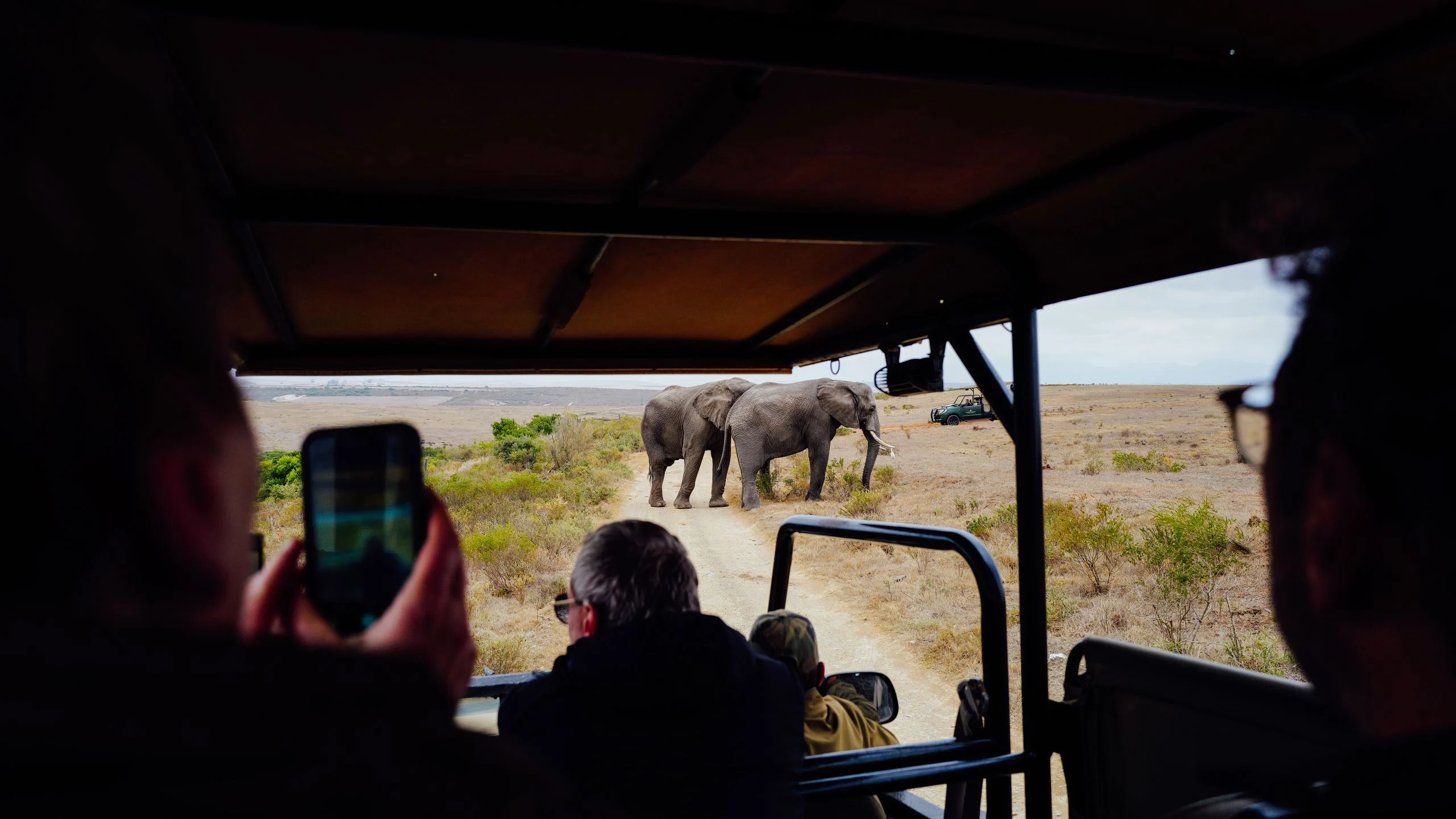
I watch guests unpack a lot of gadgets that never leave the duffel bag, and I watch other guests wish they’d brought one specific thing on day two. After twenty years and more than 500 safaris, here’s the short list of gear that actually earns its space, and the longer list of things you can leave at home.
Binoculars: non-negotiable
This is the one item I tell every guest to bring even if they bring nothing else. A vehicle full of people means you don’t always get the closest seat to a leopard in a tree or a cheetah half a kilometre out on the plains of the Masai Mara. Get 8×42 binoculars: 8x magnification balances stability with field of view, and 42mm lenses gather enough light for the low-angle mornings when most of the good sightings happen. Anything smaller than 8×32 struggles once the sun drops. Compact 8×25 travel binoculars are better than nothing, but they’re noticeably dimmer at dawn and dusk.
Power banks and charging
This is the gear question I get asked most. Many tented camps and lodges, especially the smaller ones around Samburu and Laikipia, run generator power for limited hours (often 6am-10am and 6pm-11pm) to save fuel. Between those windows your room socket may not work. A 20,000mAh power bank comfortably covers a phone, a camera battery charger, and a headlamp for a full day between generator windows. Bring your own multi-port cable too; camp shops don’t stock chargers.
Dry bags: cheap insurance
A simple roll-top dry bag, 10-20 litres, protects your camera and electronics from two real threats: dust on the drier routes through Tsavo and Amboseli, and sudden rain if you’re travelling March-May or November. It also doubles as a padded case inside your duffel for the flight in on a balloon safari morning, when everything gets loaded onto a chase vehicle before dawn.
Insider tip: Put your camera battery charger and spare memory cards in the dry bag too, not just the camera. I’ve seen more ruined trips from a rain-soaked charger than a rain-soaked camera body.
Headlamp over torch
Most camps, particularly unfenced ones near Samburu or in conservancy land bordering the Mara, ask guests not to walk unescorted after dark and provide an askari to walk you to your tent. A headlamp keeps your hands free for your bag and gives you enough light to navigate paths and spot the odd frog or genet on the way; a phone torch is a poor substitute.
A basic first aid kit
Most reputable operators, ourselves included on itineraries like the Great Migration Safari, carry a vehicle first aid kit, but a small personal one with plasters, antihistamines, rehydration salts and any personal medication is worth the extra 200 grams.
What you can skip
- A separate GPS device: your phone with offline maps downloaded does the job, and your guide knows the roads regardless
- A full tripod for game drives: vehicles move too often and a beanbag rested on the window frame is far more practical for photography
- Insect repellent devices or plug-ins: a DEET-based spray covers it
- A satellite phone: nearly all lodges and camps have radio or satellite communication with the outside world in an emergency
Zoom lens vs binoculars: which matters more?
If you have to choose one for budget reasons, binoculars win. A zoom lens gets you a photo; binoculars get you the actual sighting in real time, including the seconds before you’d even think to raise a camera. For more on the camera side specifically, see our guide to safari photography settings for beginners.
Quick answers
Do lodges provide binoculars? Some higher-end camps have a few pairs to borrow, but availability is limited and shared; bring your own if you can.
What size power bank do I actually need? 20,000mAh is enough for a phone and camera gear across a full day; 10,000mAh works if you’re not shooting heavily.
Are dry bags necessary in the dry season? Yes: dust is as damaging to electronics as rain, and dry season roads through parks like Amboseli are the dustiest of the year.
Is a headlamp really necessary if camps have lighting? Camp pathway lighting is often minimal or solar-dimmed by midnight, so yes, bring one.