You don’t need to be fluent. You need about thirty words, used sincerely, and I promise the shift in how people treat you (at the airport, at camp, in the vehicle) is immediate and noticeable. After twenty years driving guests around Kenya, the ones who make the effort get warmer service, better stories from staff, and genuinely different experiences than the ones who never try.
Greetings: start here
- Jambo: hello (the simplified, tourist-friendly greeting)
- Habari: how are you / what’s the news
- Nzuri: good / fine (the standard reply to “habari”)
- Habari za asubuhi: good morning
- Habari za jioni: good evening
- Karibu: welcome (you’ll hear this constantly; the reply is “asante”)
- Asante: thank you
- Asante sana: thank you very much
- Kwaheri: goodbye
Everyday essentials
- Tafadhali: please
- Ndiyo: yes
- Hapana: no
- Pole: sorry / I sympathise (used far more often than English “sorry”, including for small mishaps)
- Pole pole: slowly, slowly (you’ll hear guides say this often, and it’s genuinely good life advice for a safari)
- Hakuna matata: no worries (yes, it’s a real, commonly used phrase, not just a movie line)
- Chakula: food
- Maji: water
- Choo: toilet
- Bei gani?: how much? (useful at markets)
Safari-specific words worth knowing
- Simba: lion
- Tembo: elephant
- Chui: leopard
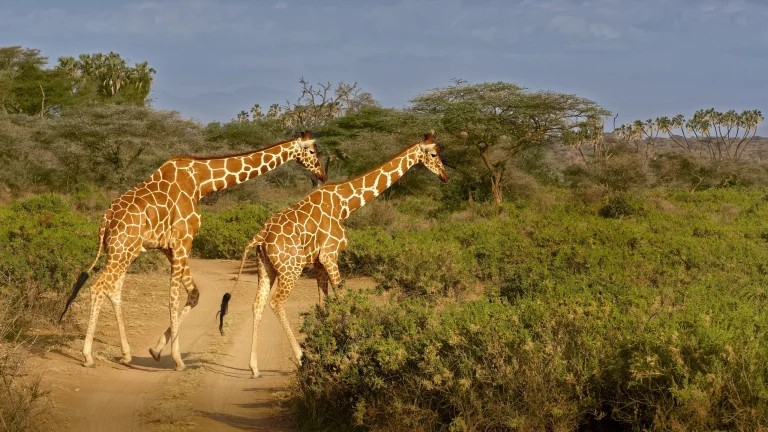
- Twiga: giraffe
- Nyati: buffalo
- Kifaru: rhino
- Duma: cheetah
- Ndege: bird (also means airplane, depending on context)
- Mbuga: the plains / savanna (also used loosely for a game park)
- Safari njema: have a good journey / safe travels
- Rafiki: friend
Insider tip: Learn to say the Big Five in Swahili before your first game drive and use them instead of English when you spot one. Guides light up every time: it tells them you actually prepared, and I’ve seen it turn a standard drive into a much more animated, story-filled one.
Where you’ll use these most
Beyond your vehicle and camp staff, you’ll get the most mileage out of greetings at markets and during any cultural stop, including a village visit where a genuine “jambo” and “asante sana” go a long way before the conversation moves into English. It also helps at Nairobi’s Wilson Airport before a flying safari departure, where ground staff appreciate the effort even in a rushed check-in queue.
A note on pronunciation
Swahili is phonetic; it’s read exactly as it’s spelled, unlike English. Vowels are consistent: “a” as in father, “e” as in bed, “i” as in machine, “o” as in go, “u” as in flute. That consistency makes it far easier to pick up quickly than most languages tourists attempt on holiday.
Don’t overthink grammar
Nobody expects a tourist to conjugate Swahili verbs correctly. Staff, guides, and market vendors respond to effort and tone far more than grammatical accuracy. A warmly delivered “jambo, habari, asante sana” gets you further than a grammatically perfect sentence delivered flatly.
Quick answers
Is English widely spoken in Kenya? Yes, English is an official language alongside Swahili, and nearly everyone in tourism speaks it fluently, but using Swahili still changes the tone of an interaction noticeably.
What’s the difference between Jambo and Habari? “Jambo” is a simplified hello aimed at visitors; “Habari” is the more natural everyday greeting Kenyans use with each other, asking essentially “what’s the news?”
Do I need Swahili in Samburu or Maasai areas? Basic Swahili still works as a common language, though Samburu and Maasai communities also speak their own Maa-based languages (see our guide to Samburu culture for more on that).
Is it rude to mispronounce words? Not at all: mispronunciation with genuine effort is consistently well received across Kenya.